The Problem
Visual is a platform for integrated farm management — covering everything from staffing to crop maintenance across web, iOS, and Android. User feedback revealed a clear pain point: farmers had no reliable way to determine the right moment to apply treatments like pesticides and fertilizers.
Atmospheric conditions — temperature, rainfall, wind, humidity — can partially or completely nullify a treatment's effect, or even cause a reaction opposite to what was intended. Farmers were making these decisions based on experience and intuition, with no data-driven support from the platform.
I took on the challenge of collecting user feedback, prototyping solutions, and delivering a feature that would give farmers clear, actionable guidance.
Research & Insights
My initial aim was to develop a proposal that allowed users — managers, growers, and field workers — to easily determine whether conditions favor applying treatments. I framed three research questions:
What is the real need of the user?
What kind of information is relevant to them?
Where is the best place to provide this information?
I conducted usability sessions with clients managing different crop types and sizes to arrive at a comprehensive solution.
Key findings
Users need to know whether it is the right moment to apply a specific treatment — and why.
Each treatment has specific contraindications. Users want a quick yes-or-no answer, but they also want the reasoning behind the recommendation.
Since weather conditions change constantly, the ideal location for this feature is the mobile app — accessible in the field.
Design Process
With these insights, I began exploring possibilities. The goal was to provide an optimal solution to the problem of uncertainty around treatment timing — making it instantly clear whether conditions were suitable.
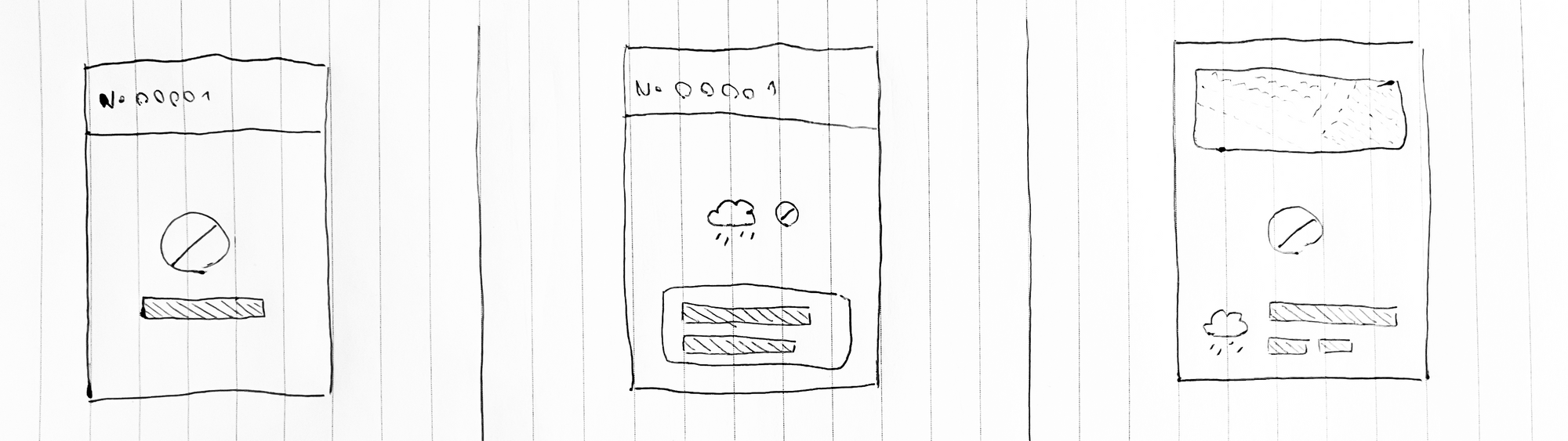
The simplest proposal was a view that communicates in natural language whether it is the right time to apply treatment. I iterated toward more informative designs that also showed the reason visually.
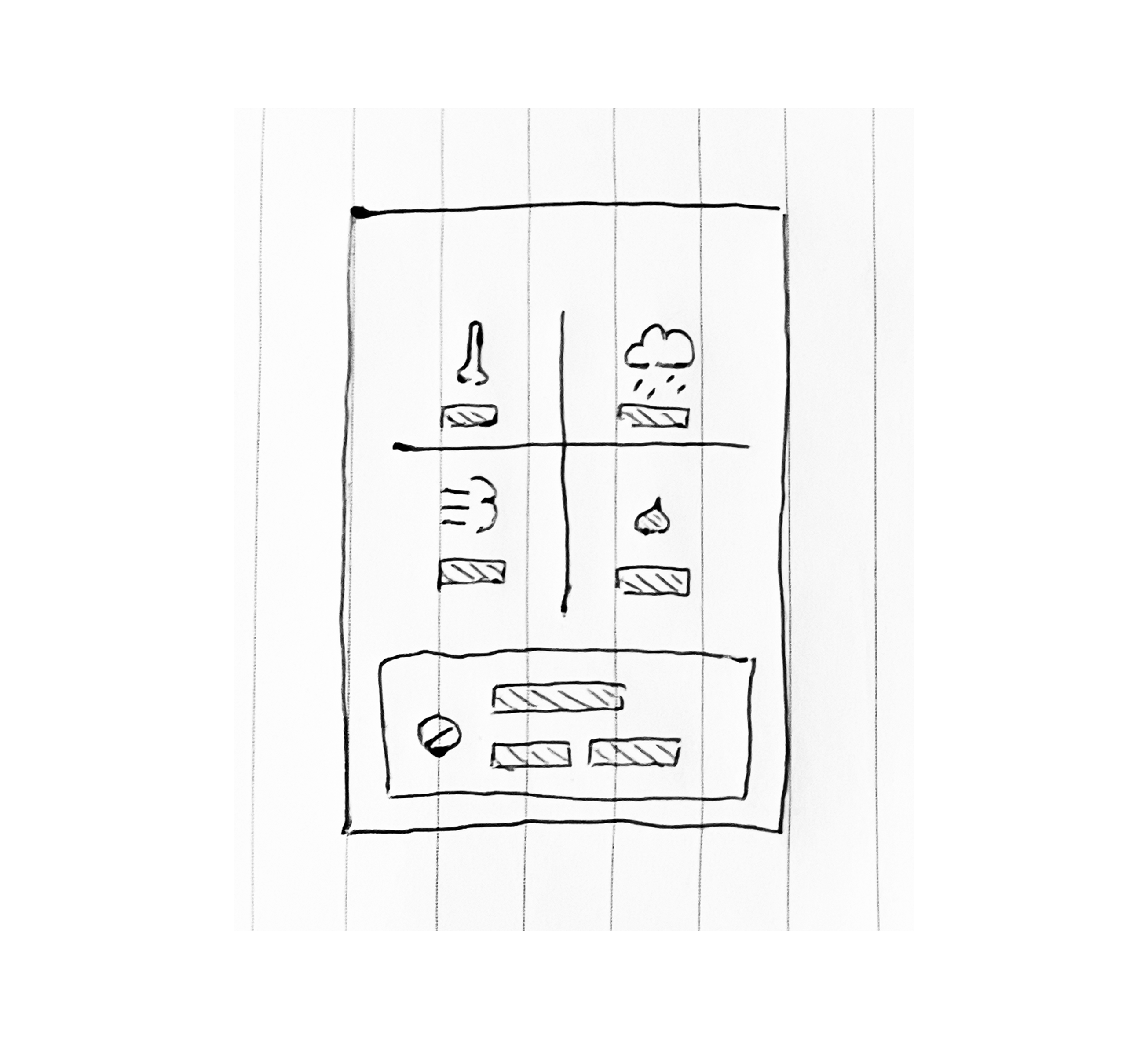
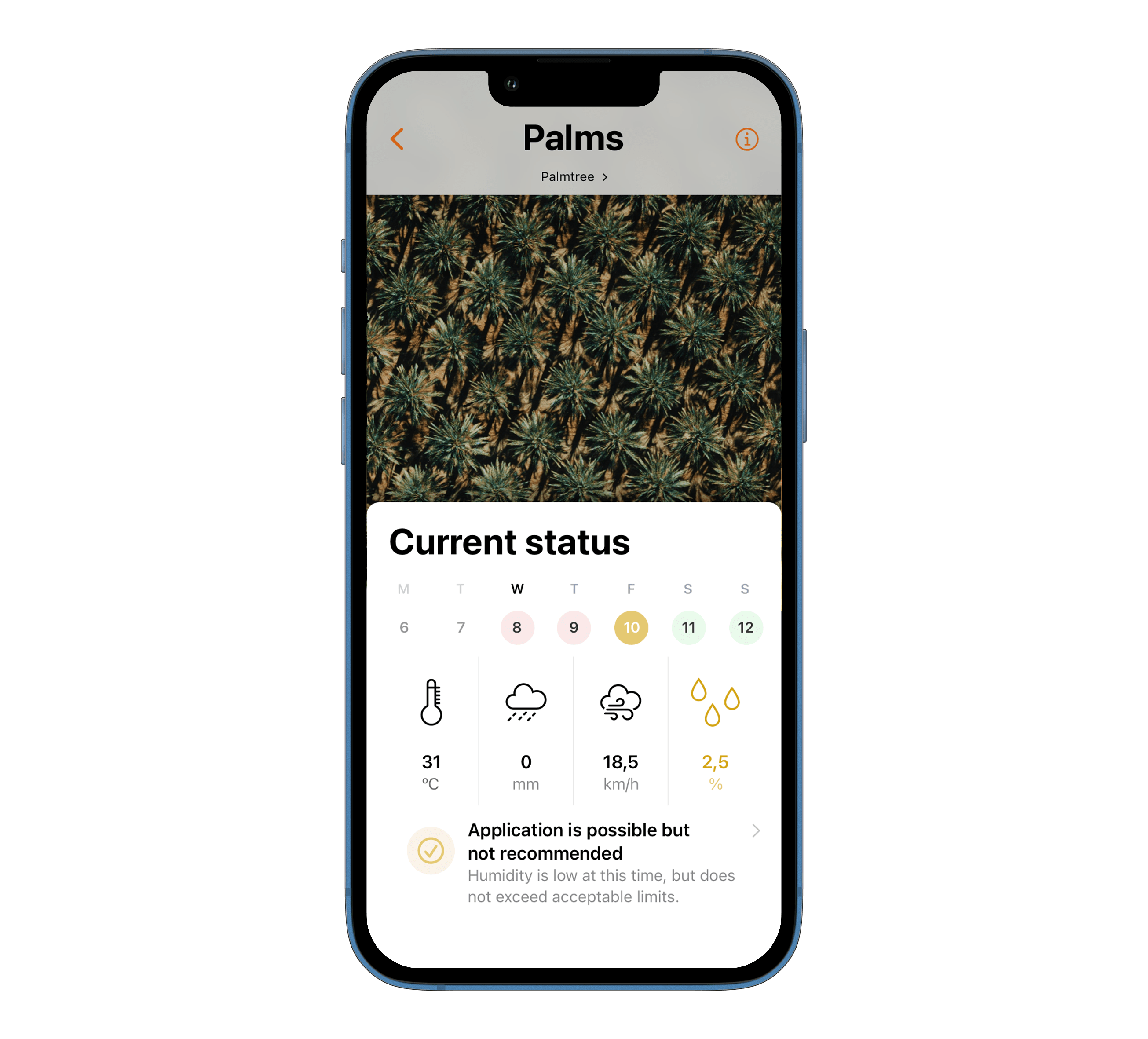
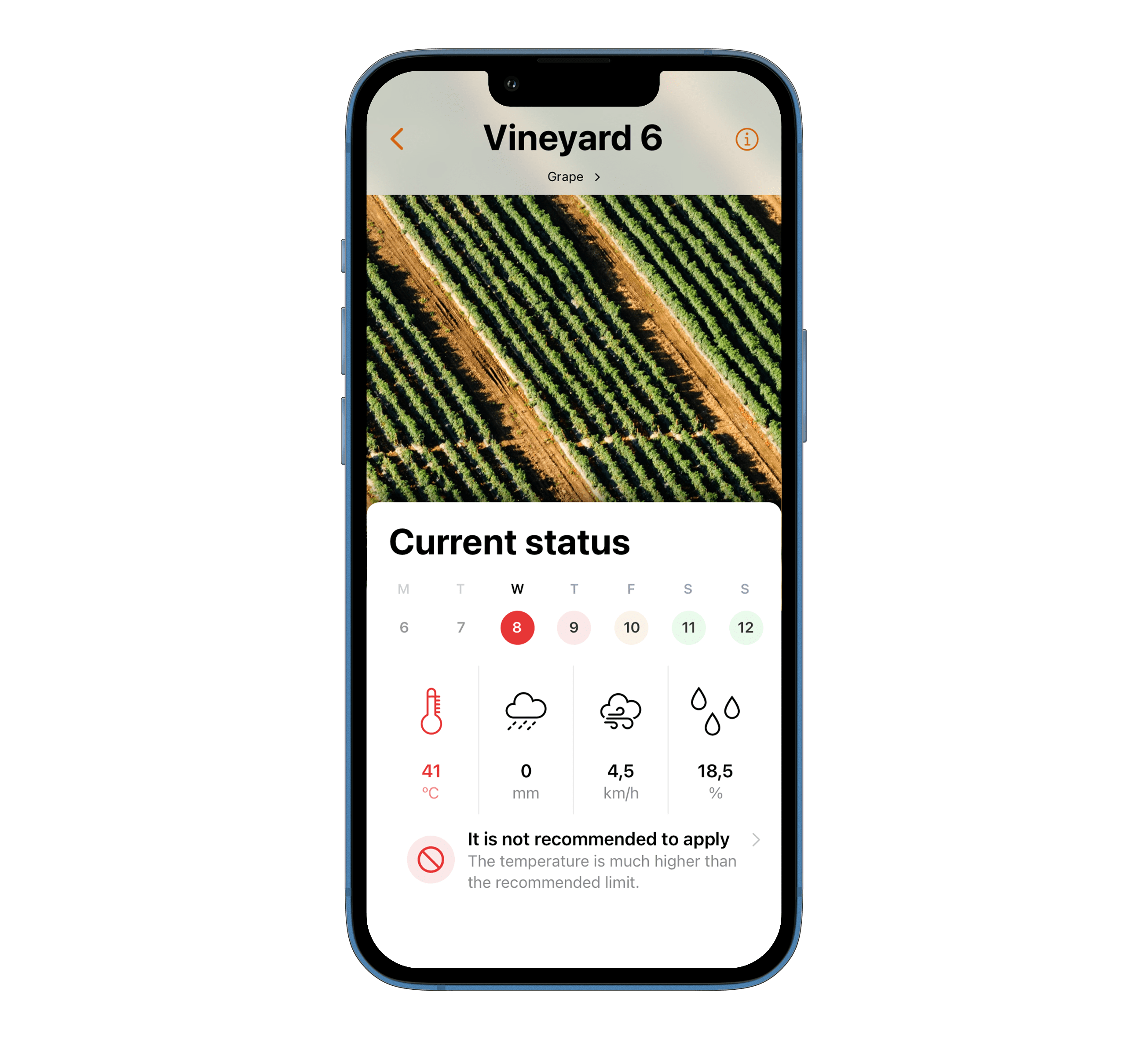
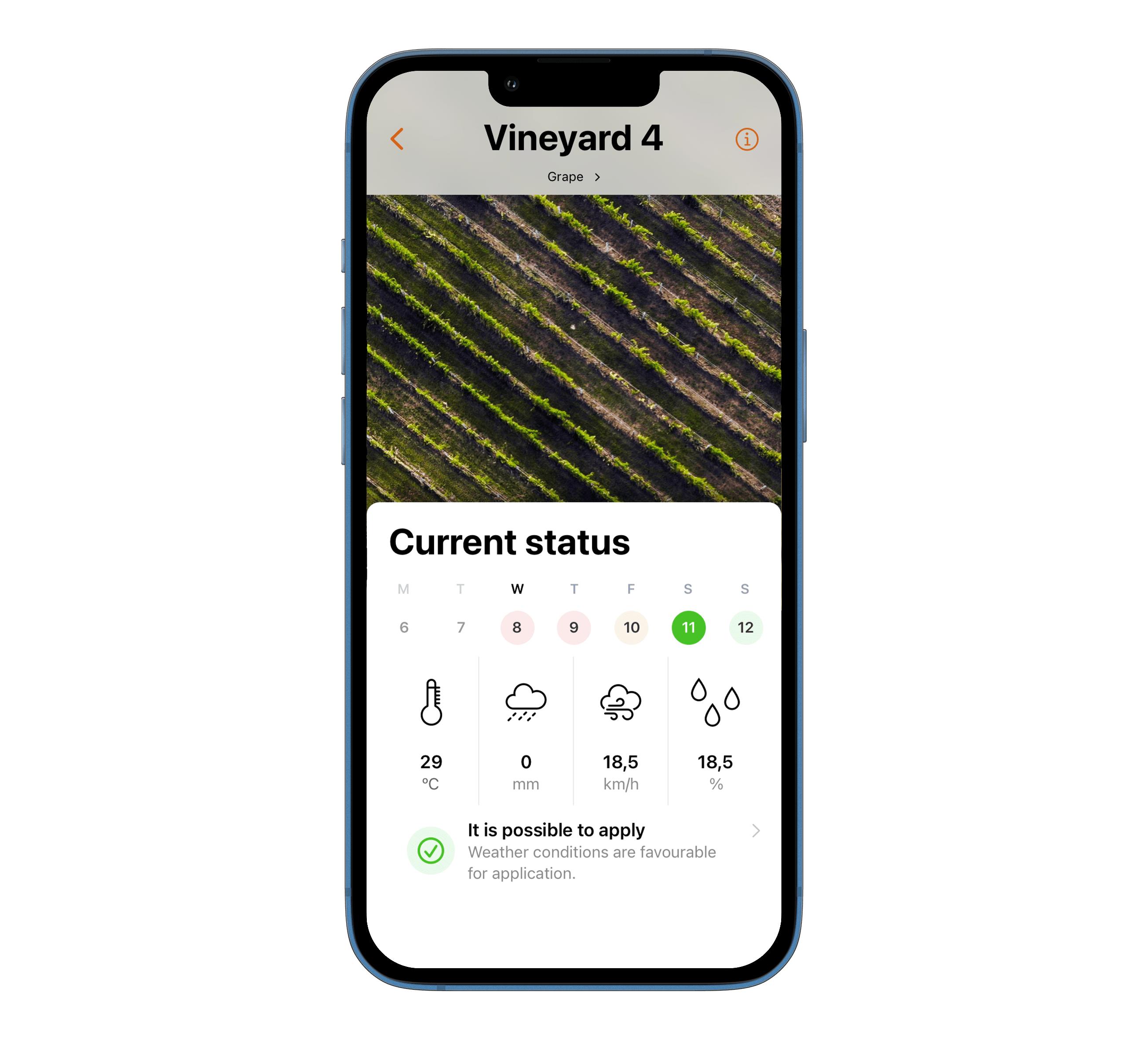
I settled on a version where each relevant climatic factor is displayed alongside clear plot identification — and any problematic parameter is highlighted so the user immediately understands why a treatment is or is not recommended.
Testing & Iteration
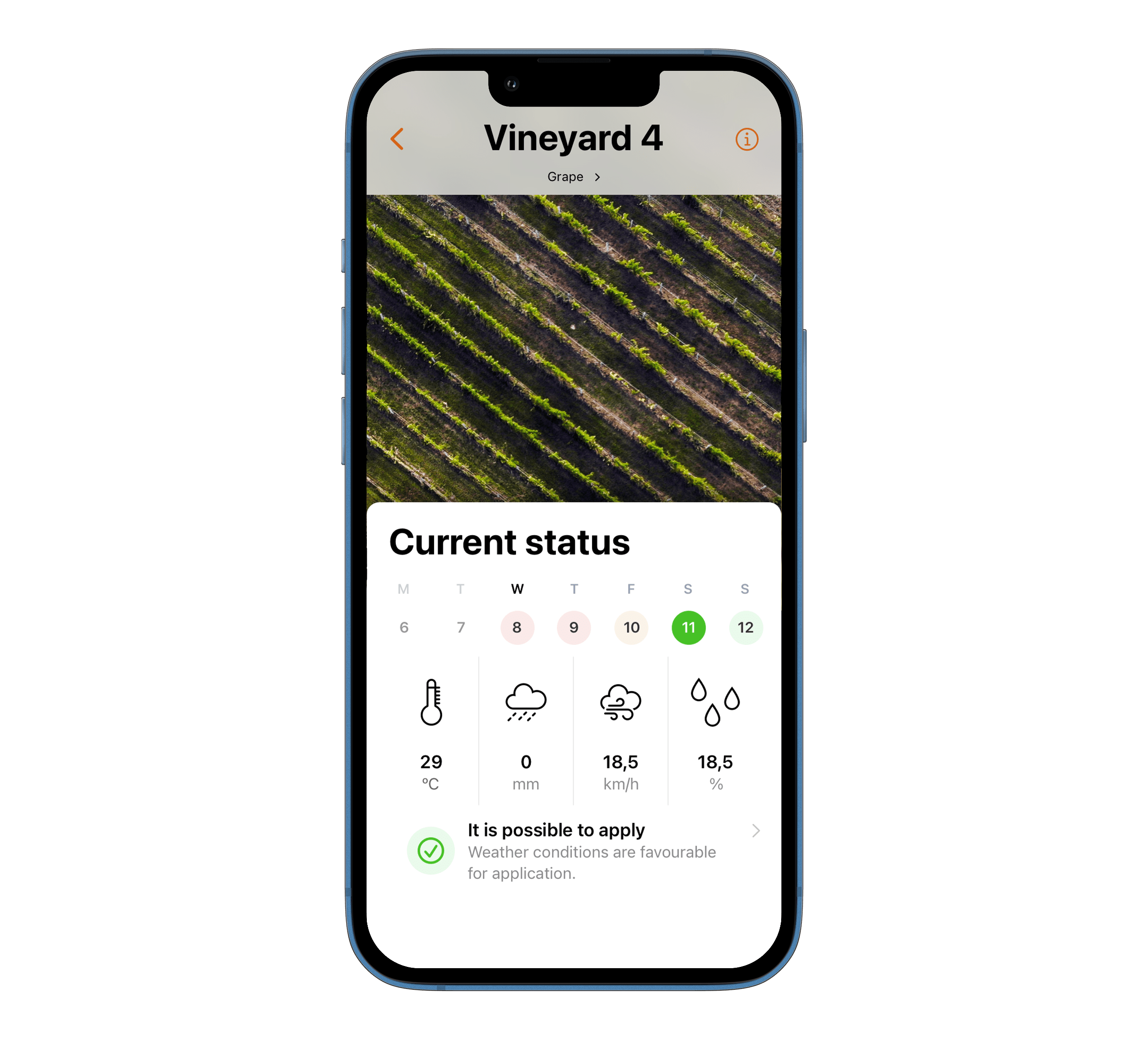
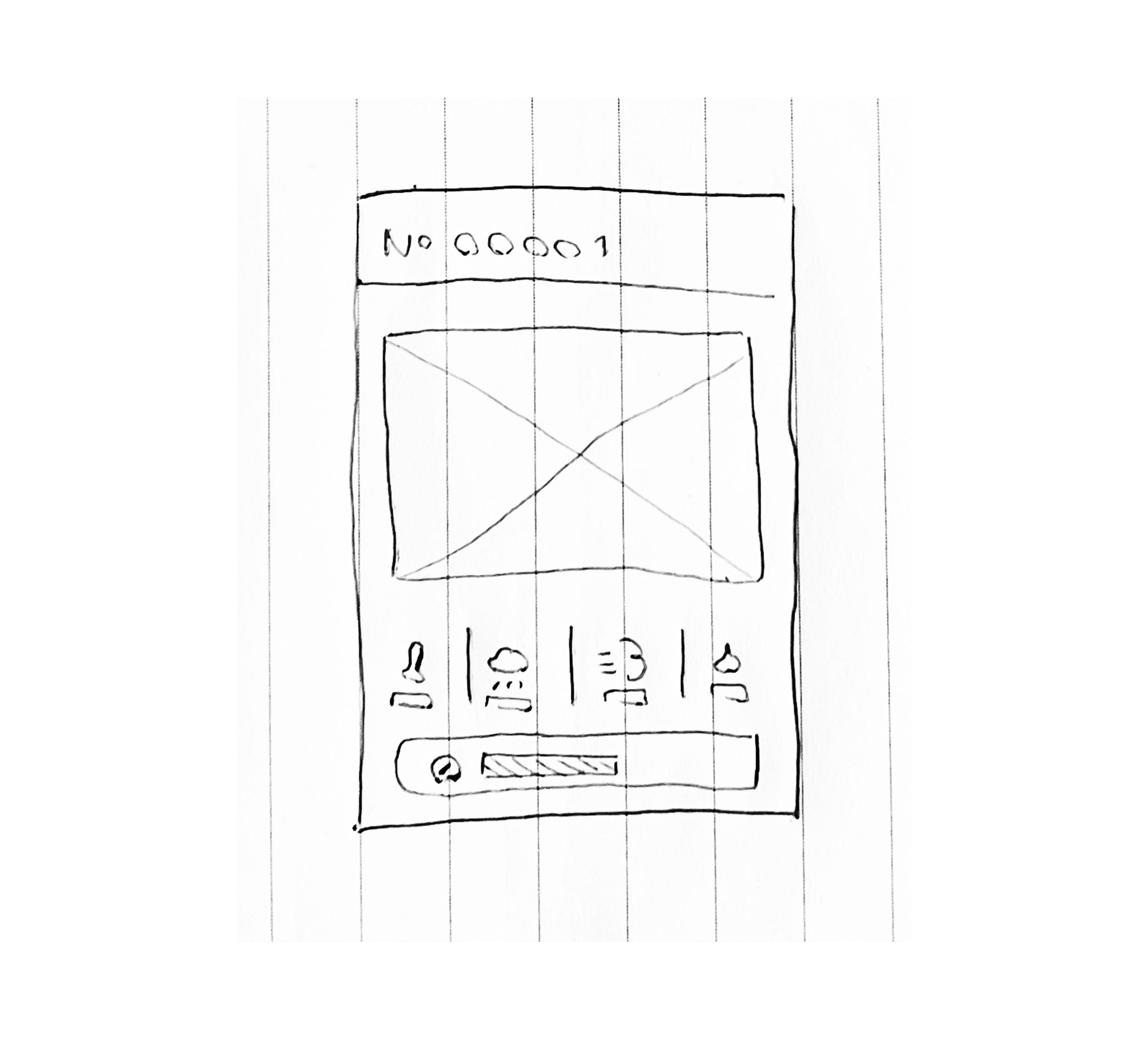
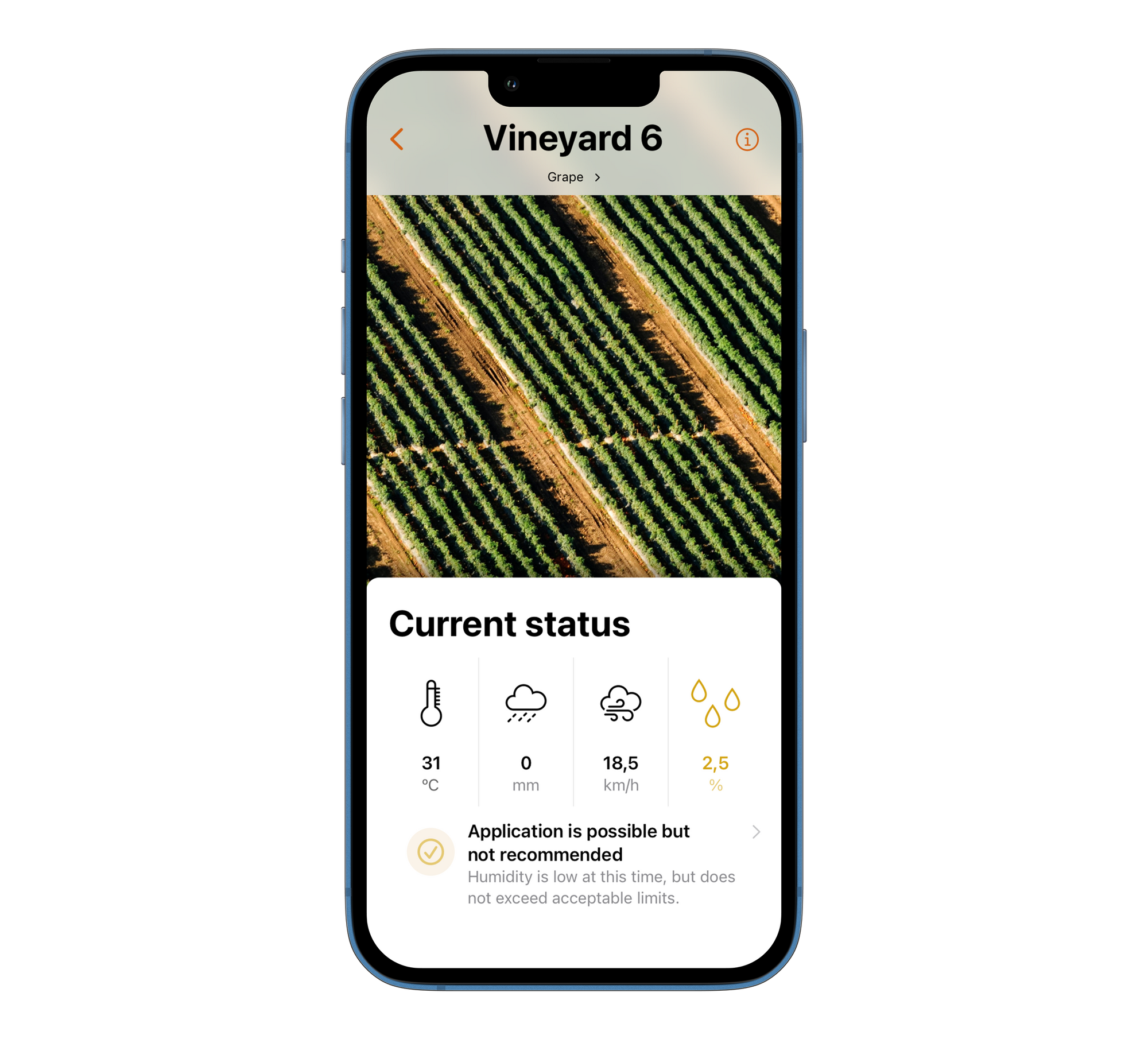
The prototype showed, for each plot, its unique name, satellite image, and four atmospheric parameters: temperature, rainfall, wind, and humidity. The app clearly communicated whether to apply treatment and the reason behind the recommendation — highlighting the problematic parameter.
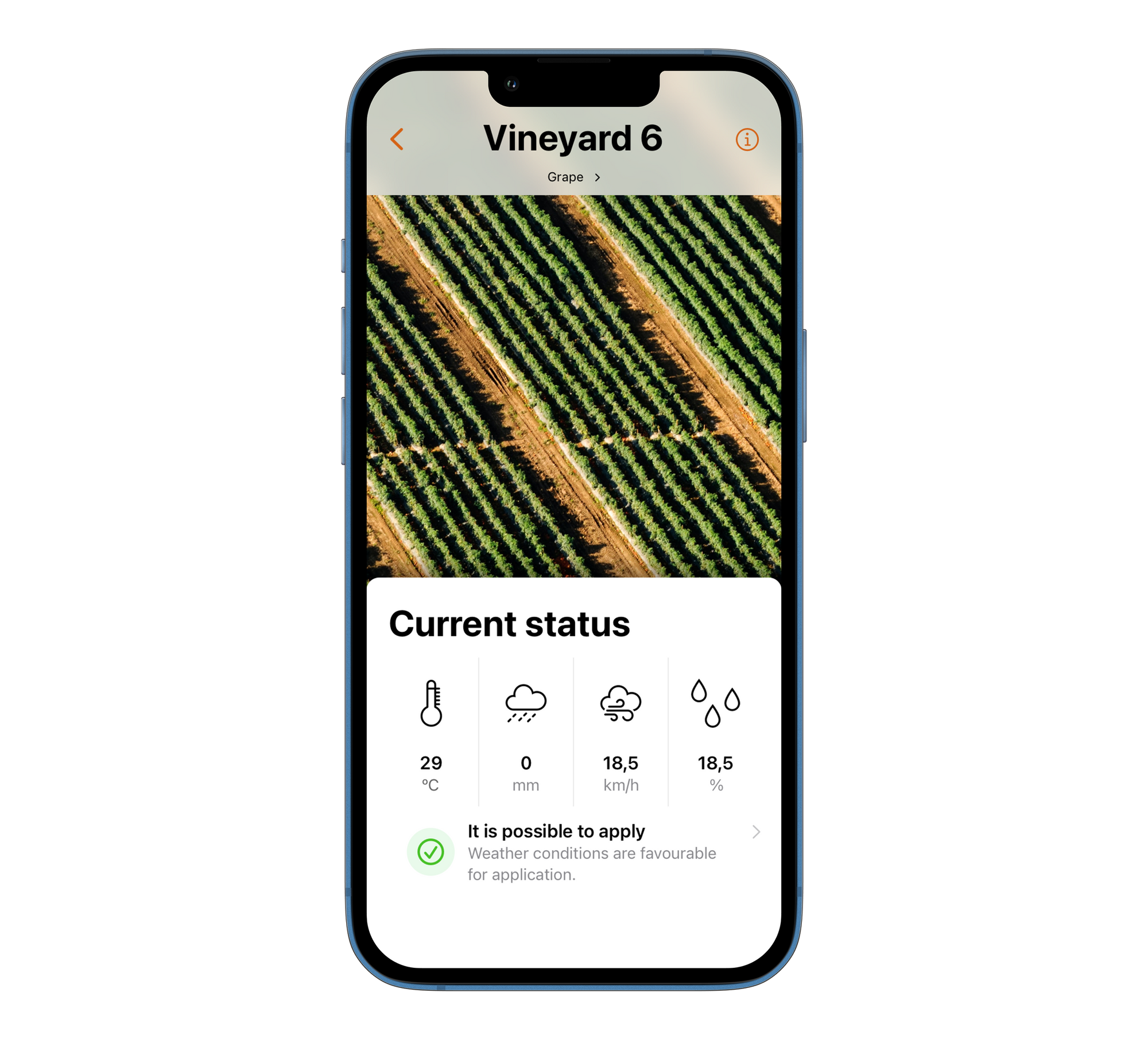
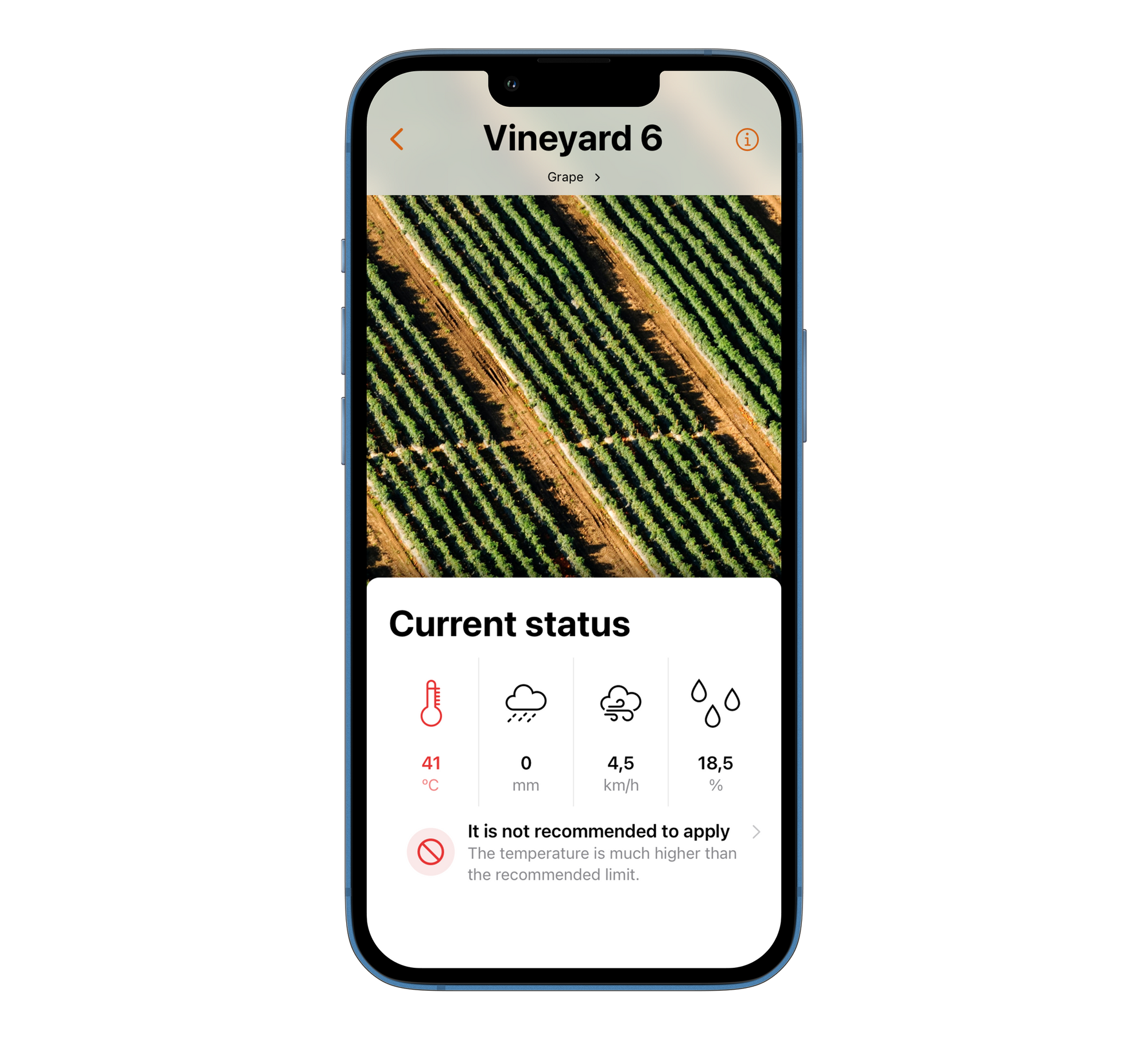
For ambiguous situations where data did not indicate an extreme condition, the app communicated this clearly and left the decision to the user's discretion.
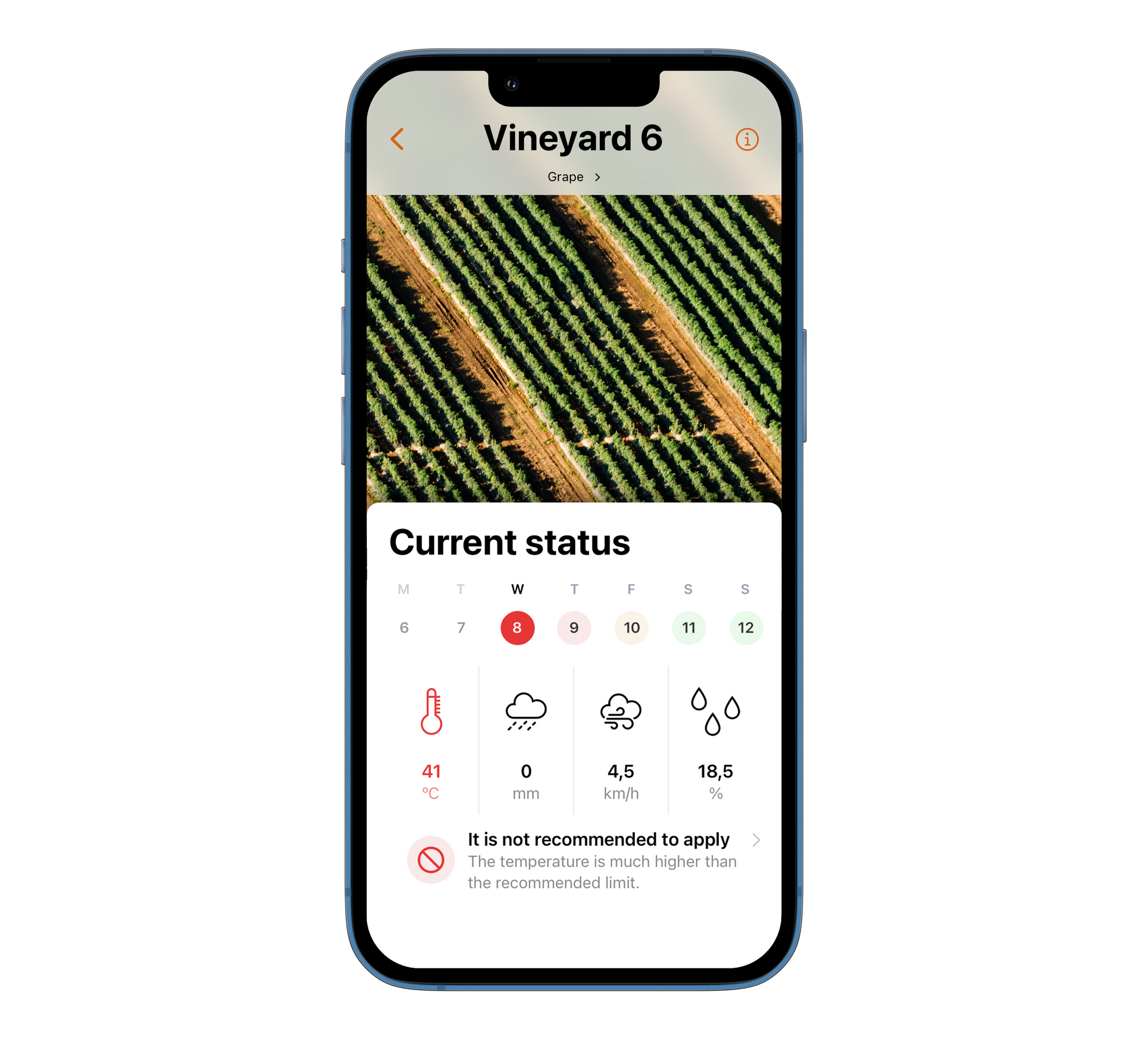
User testing sessions were very positive and revealed one critical addition: users needed to see the weekly forecast, not just current conditions. This made planning treatments across multiple plots over the coming days possible.
Final Solution
The tested and refined feature allowed farm workers and managers to know precisely when and why conditions were ideal for applying crop treatments. Because the app knows the crop type in each plot, recommendations sometimes differ between neighboring plots — some crops tolerate certain conditions better than others. This information helps optimize treatment timing across an entire operation.
Impact & Legacy
Adoption of the feature was widespread. Farm managers and field workers incorporated it into their regular workflow, achieving both time and cost optimizations by eliminating guesswork from treatment decisions.
Specific adoption metrics are not disclosed to respect the private nature of this data.
"With technology applied to the field we make more precise decisions."Marta Alino, Head of Agrarian Projects, Rusticas de l'Horta Nord
"Our customers are very versatile, they have fruit tree plantations, but also olive trees or vineyards. In this case, the platform makes it easier for us to have as much information as possible and to use the most responsible phytosanitary products."Enrique Llopis, Technical Agricultural Engineer, Llopis y Llopis
The forecast calendar became an essential planning tool — farmers used it to schedule treatments across multiple plots over the coming week, coordinating application windows that maximized effectiveness.
This project demonstrated that even in traditionally low-tech industries, well-researched design can drive meaningful behavior change. The feature did not just display data — it translated complex atmospheric conditions into clear, actionable recommendations that farmers trusted enough to change how they work.